With the start of the Mini Globe Race 2025 rapidly approaching I had a hard time being patient enough to wait for the right conditions to apply the fiberglass to the deck, sealing the hull up for good. The seasonal chill made it too cold for the resin and cloth to adhere to the wood so I was forced to wait for it to warm up a bit.
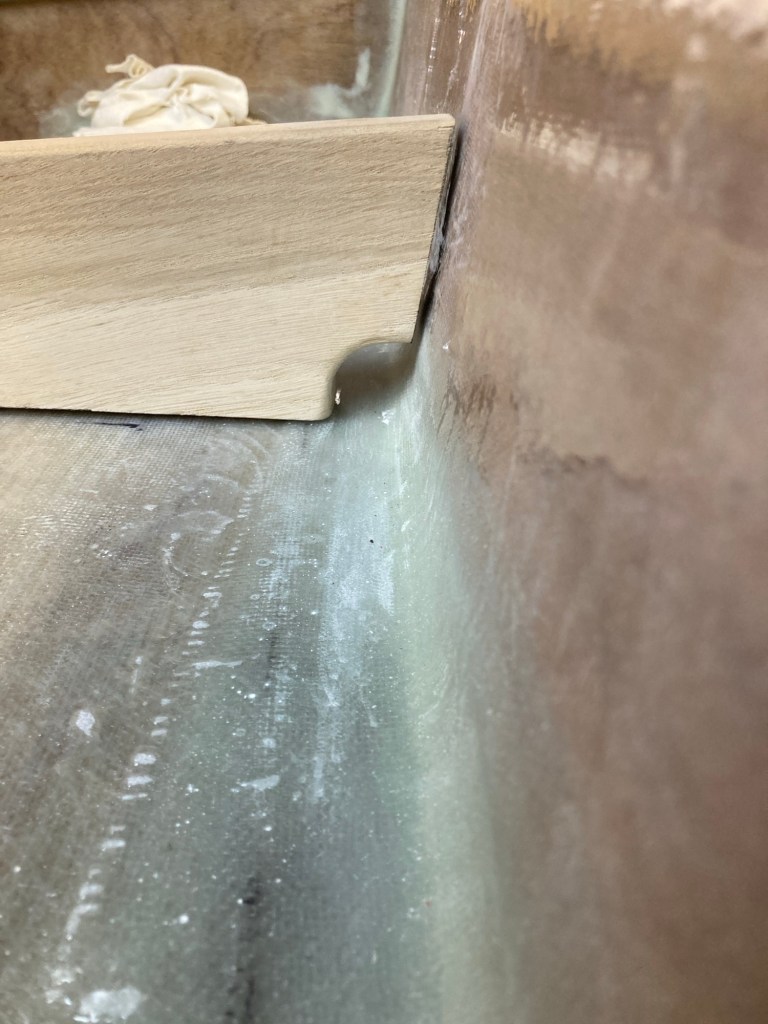
Fast forward to April and I finally scored a dry weekend with decent temps. I began taping all of the seams by doubling the requirement of the plans with 600g/m2 (20oz/yd.) all over the hull and 900g/m2 (60oz/yd.) securing the roof of the observation pod. I helped the cloth sit into the inside corners in the cockpit by applying a fillet of epoxy thickened with colloidal silica into each corner before I laid down the glass. This ensured that no bubbles could form in the corners as the mixture filled in any gaps where the cloth was reluctant to conform.
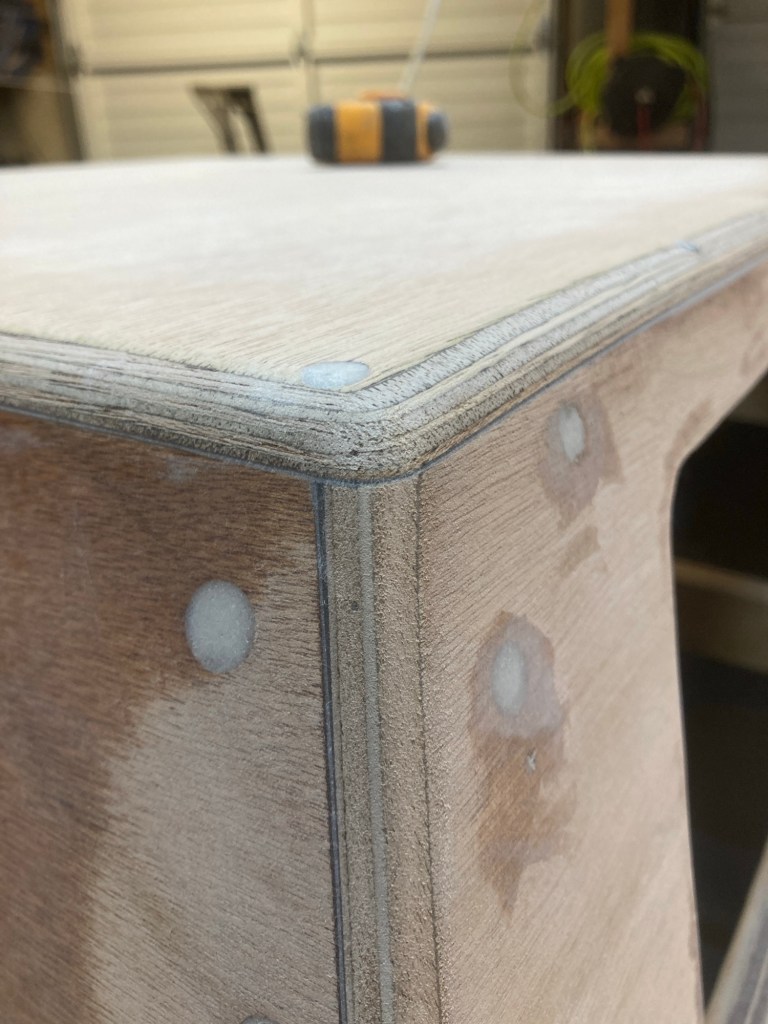


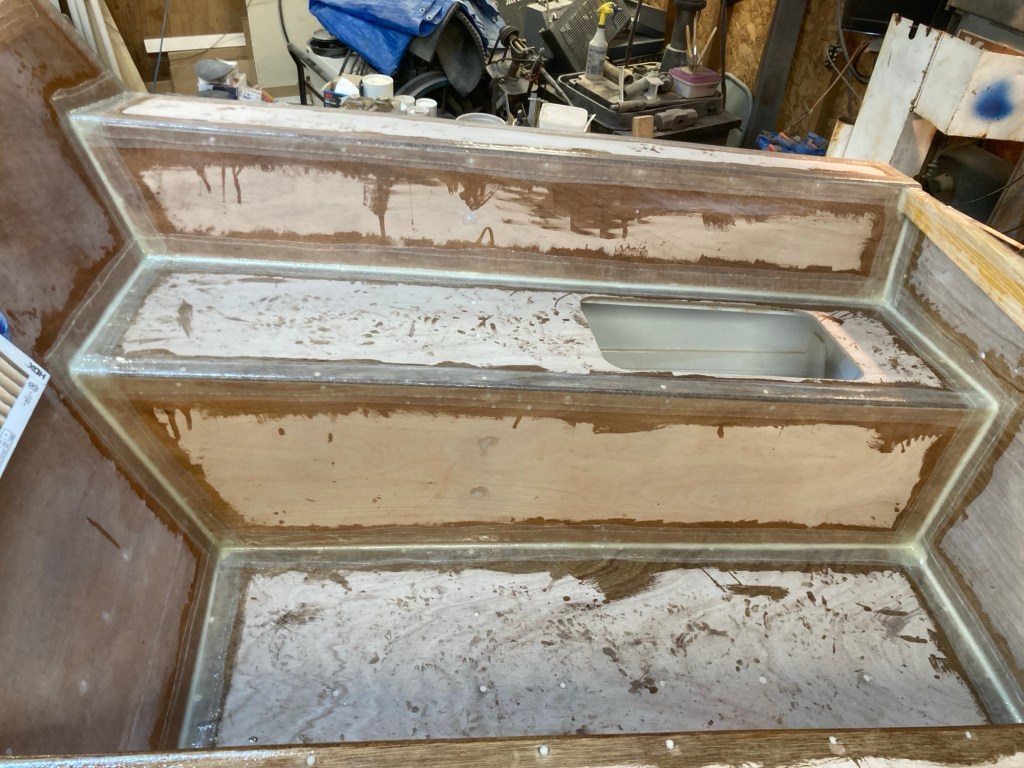
As the deck is made of 9mm Okume marine plywood the spec for the fiberglass is 600g/m2 or 20oz/yd. After feathering the edges of the tape, and washing the deck down with solvent, I laid up two layers of 10oz (339g/m2) for a total of 20oz (680g/m2). These went on smoothly. I used the 206 slow hardener and carefully rolled out as many of the bubbles as I could see. Interestingly enough I have found that the bubbles in the layup are always easier to see after it has cured!
Now fiberglassing the cockpit was an epic marathon. I did two layers of the 10oz (339g/m2) fiberglass cloth in 22 individual pieces. Two pieces for the floor, footwell sides, seat tops, seat backs, coaming tops, s-frame, and transom. As I did not want to do any sanding I decided to do it all in one shot while maintaining a wet edge the whole time. Each piece took a little over an hour so 22 pieces took a full 24 hours. I worked from 6pm one evening until 6pm the next night without stopping. Whew, good thing I’m getting used to the sleep deprivation!


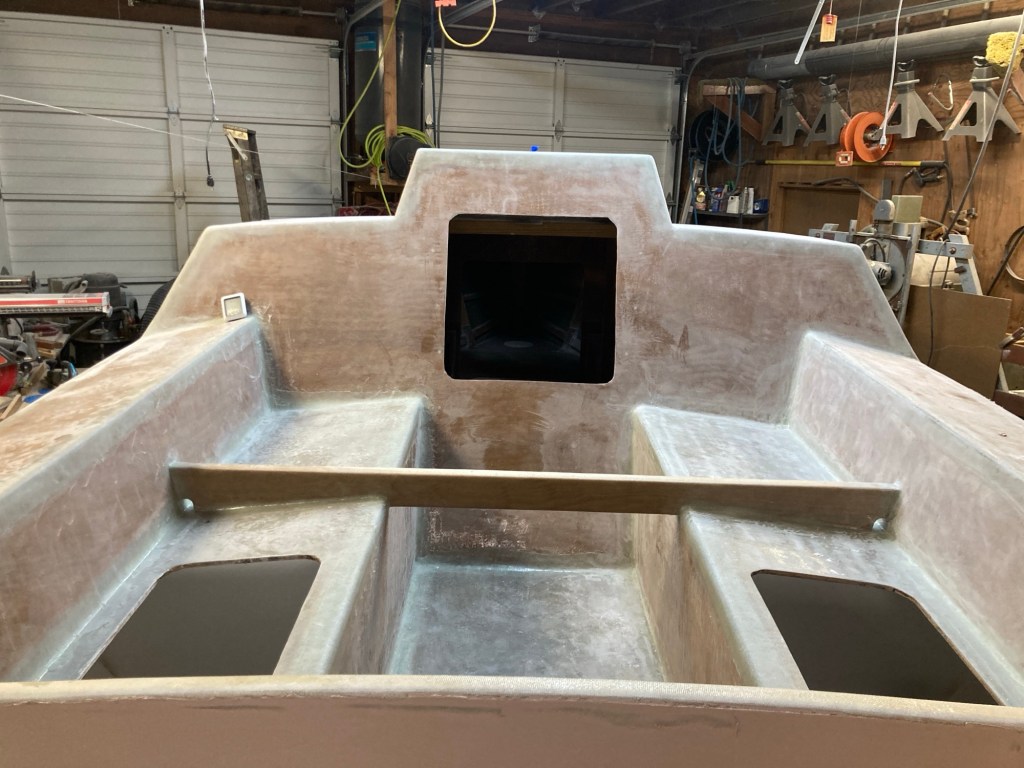
I made some additional reinforcements to the floor and seats of the cockpit. Instead of the two layers of 10oz (339g/m2) cloth that I used for the rest of the schedule, I used one layer of the 1708 biaxial cloth that I had left over from the hull followed by a layer of the 10oz. cloth for a total weight in these areas of 35oz or 1186g/m2. Super burly! This should add a considerable amount of strength to these high traffic, high wear areas. I could drop my anchor on the cockpit floor now with absolutely no worries.
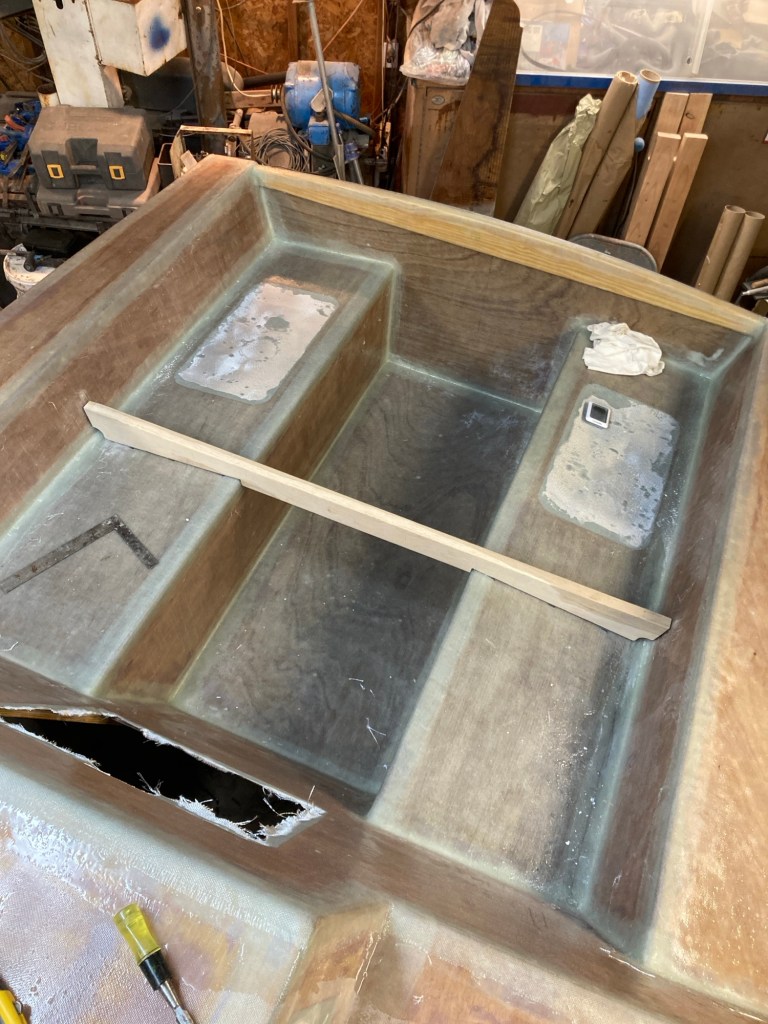
Now with the deck and cockpit glassed, I laminated the white oak beam I had made for the traveler into the cockpit as well as making a mast step out of G-10 and getting it glued down in the correct spot on deck. Up next will be another round of sanding and fairing. Thanks for reading!


 Josh Kali - Ocean Racing